Independent digital products
Mt. Sudoku
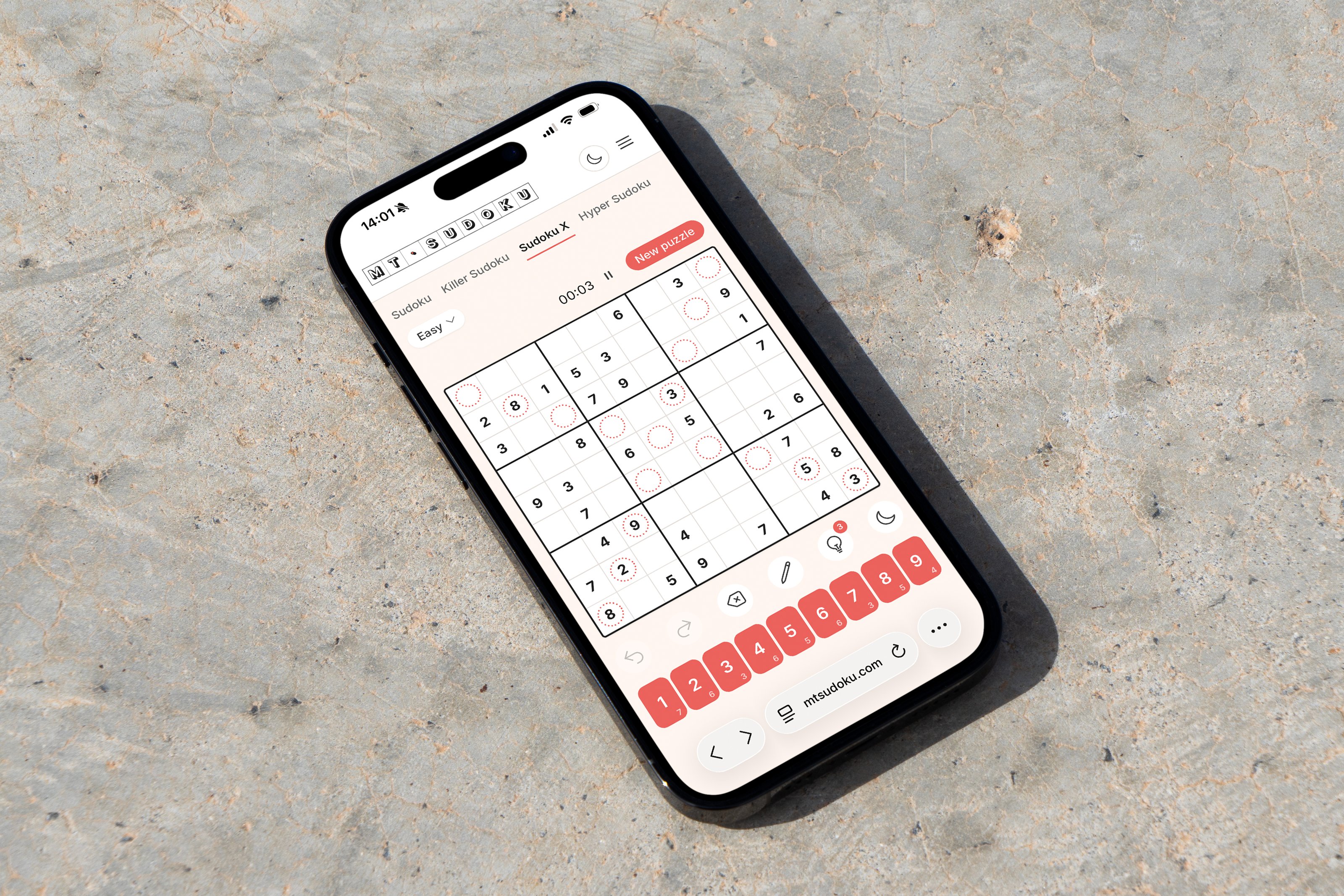
Sudoku is one of the most-searched casual puzzles on the web, and most of the sites serving that audience are slow, ad-heavy, and ten years out of date. Mt. Sudoku is my entry into that market — a live, working consumer product designed and built solo from a Berlin studio, with the bet that craft and a better user experience can take share from incumbents who haven’t really tried in a decade.
- Brand design
- Product design
- Programmatic marketing + SEO
- Role
- Independent — solo
- Year
- 2026
- Build time
- 30 days
- Live at
- mtsudoku.com
Brand and visual system
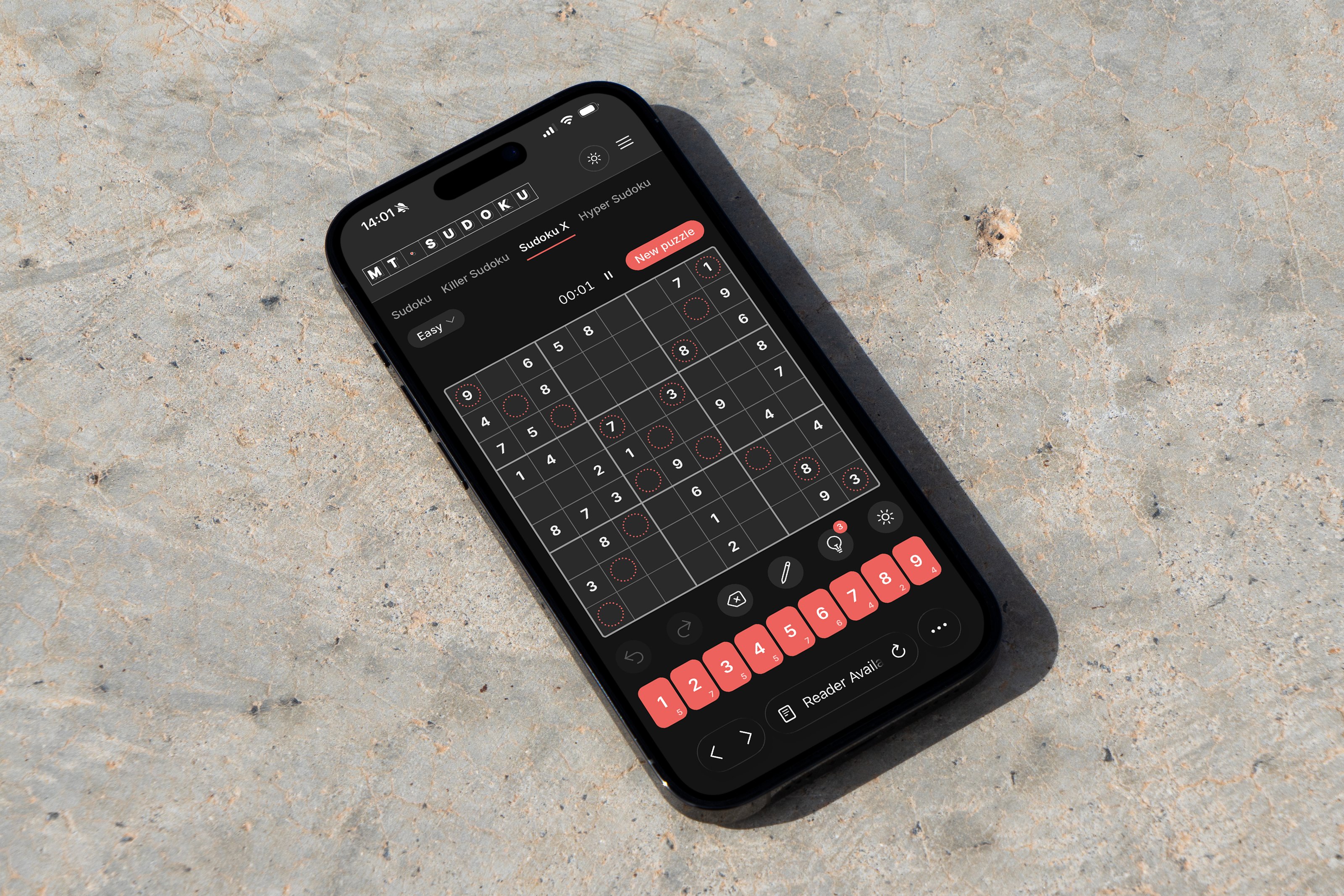
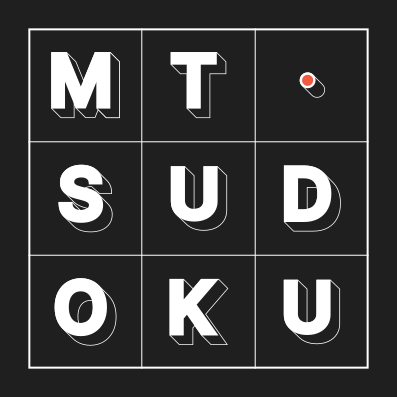
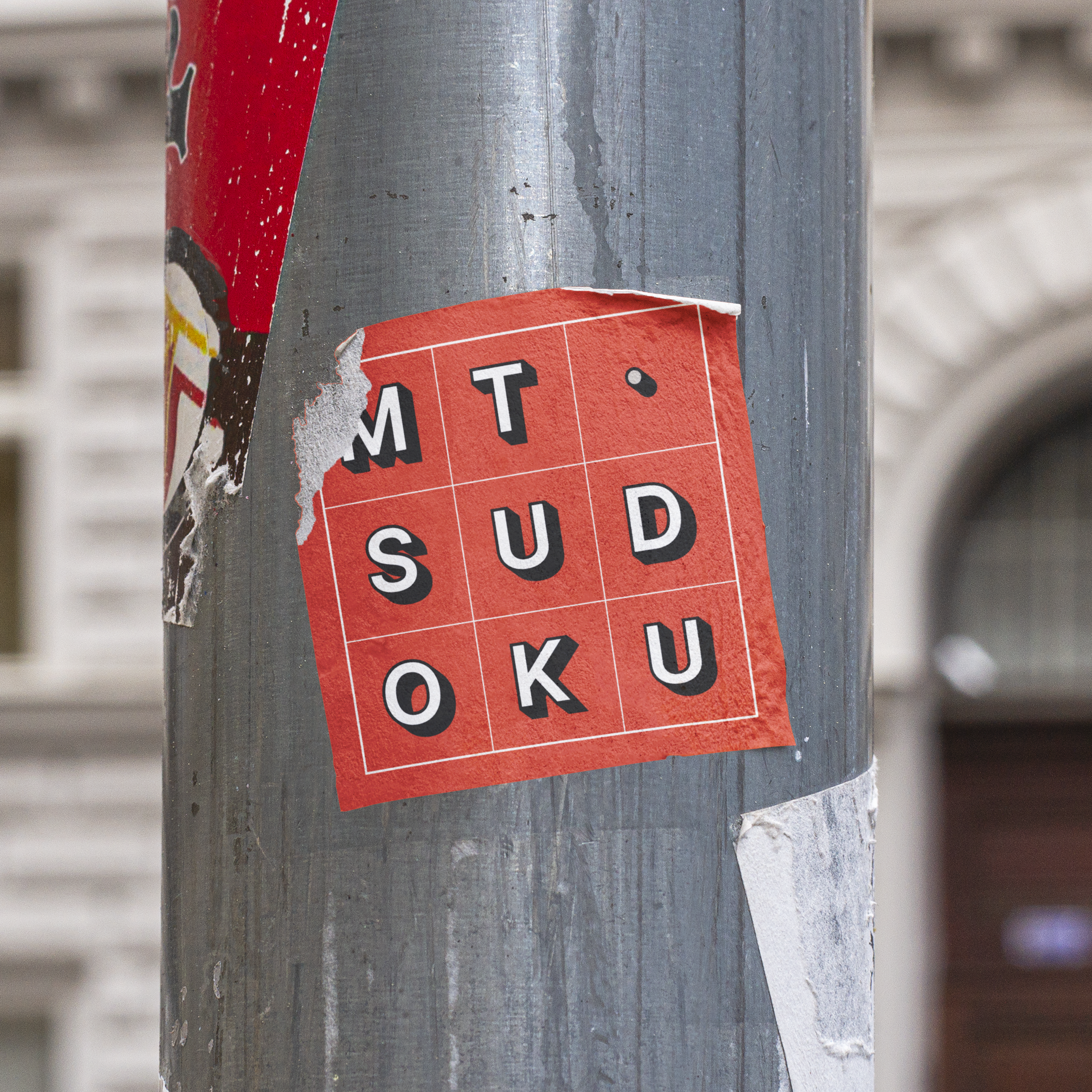
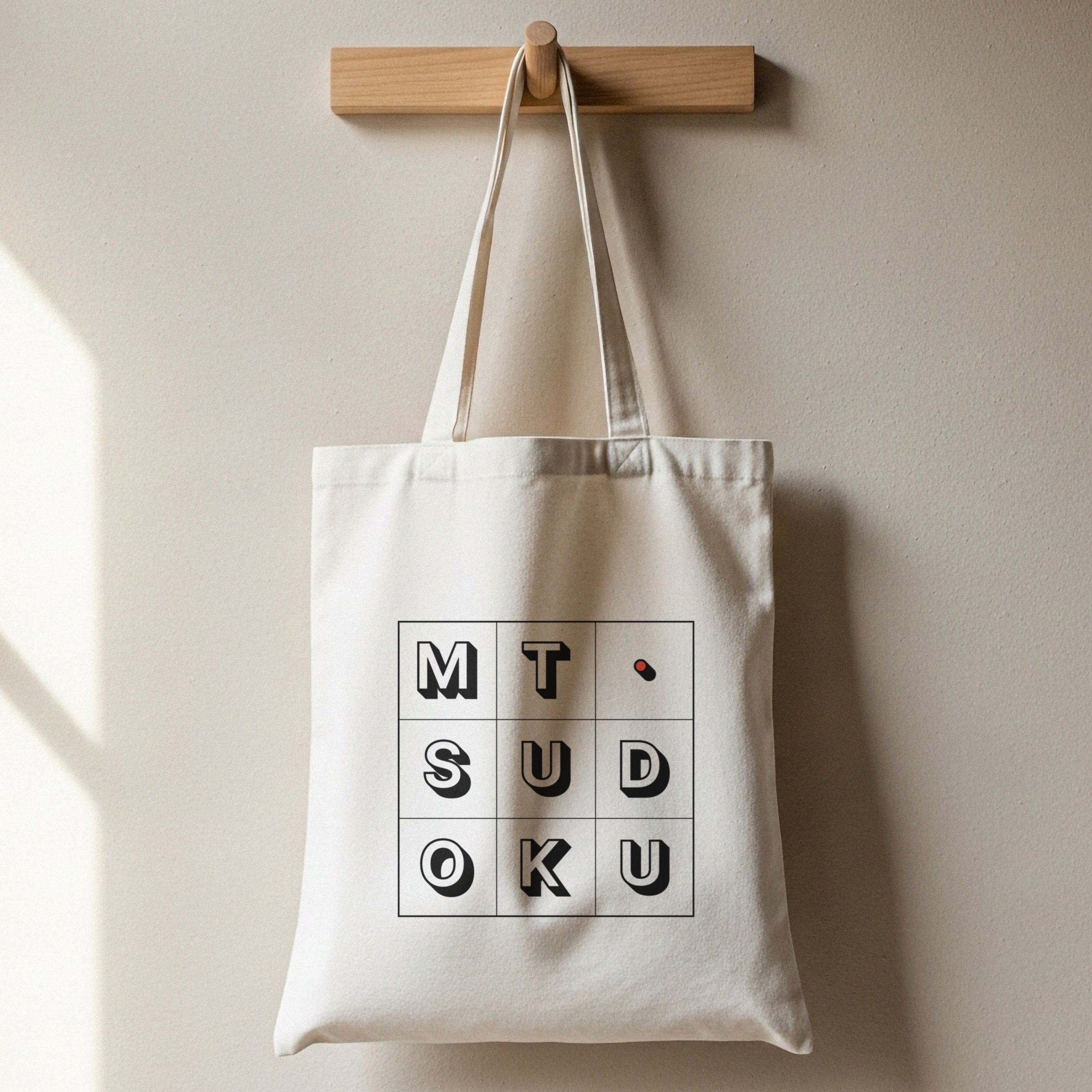
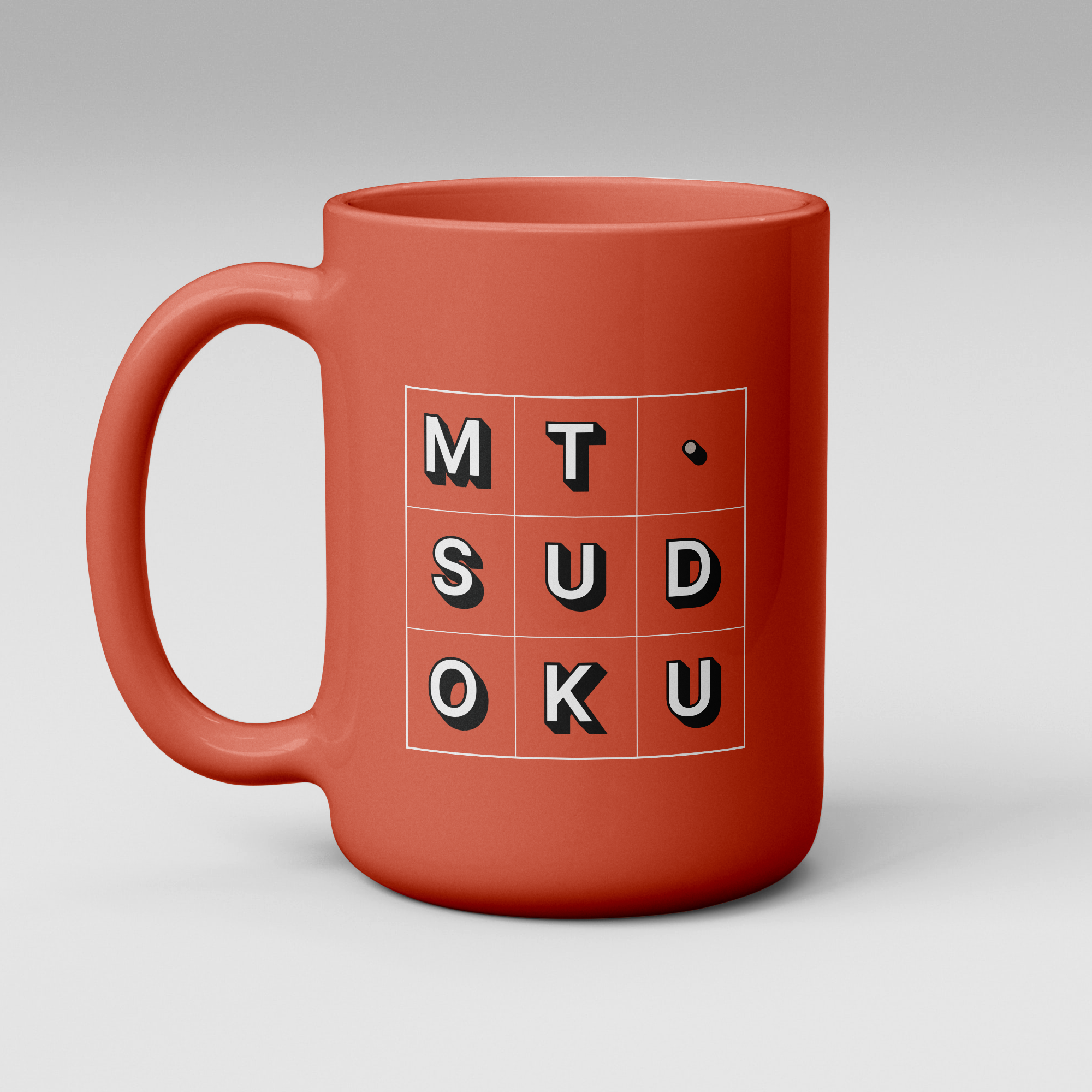
The brand is a light take on a system for a logical game — structured enough to hold across a full product surface, relaxed enough to have a bit of fun with it. The wordmark echoes the grid; three practical colourways keep it versatile across print and UI alike. The same token set — coral, ink and paper — runs unchanged across every surface: the daily ribbon, the technique glossary, the printable PDFs, the article layouts. Dark mode is supported. Off the screen, the brand extends into a small collection of physical items — sticker, tote, mug — waiting on the user numbers to justify a run.



Solver engine
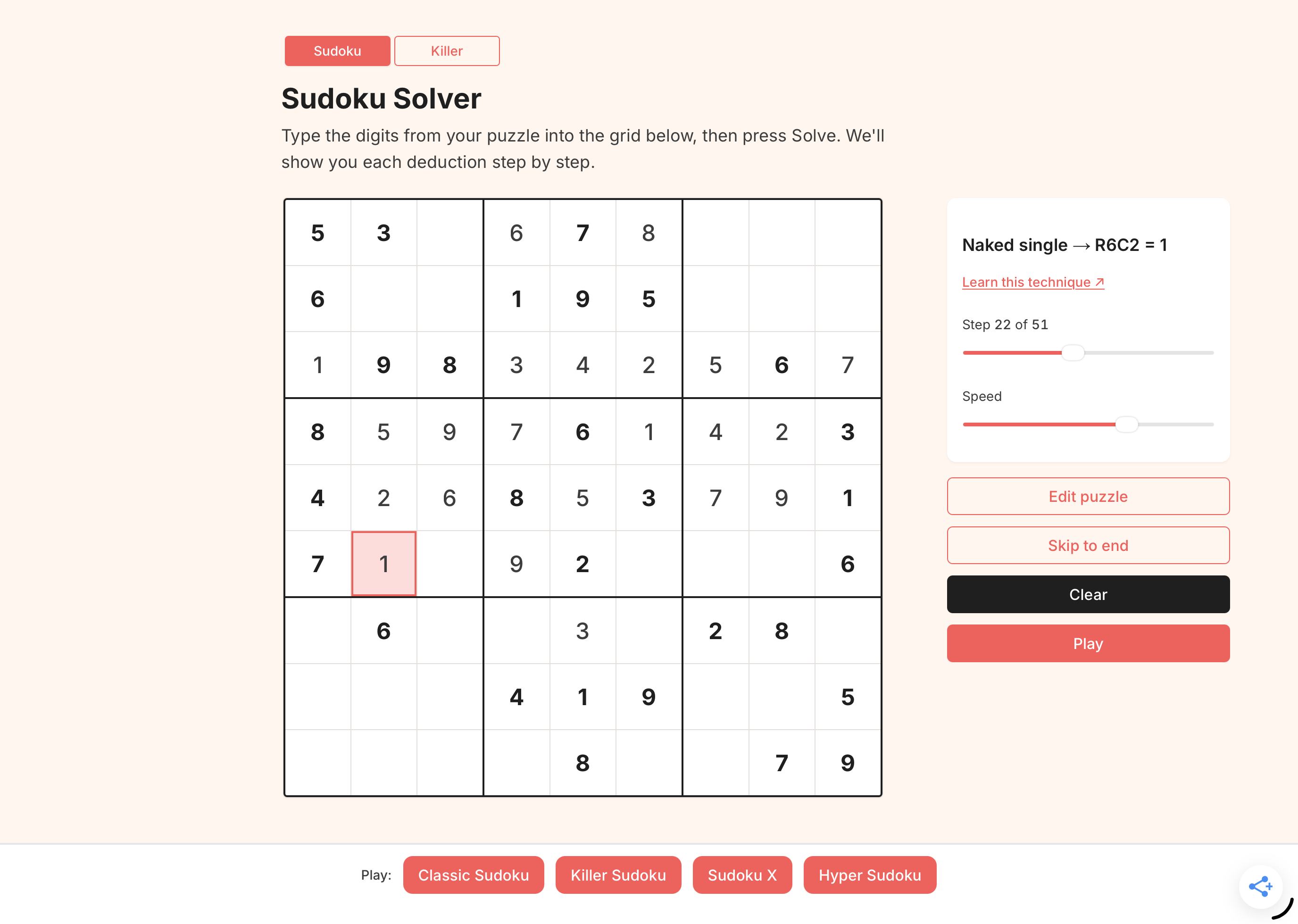
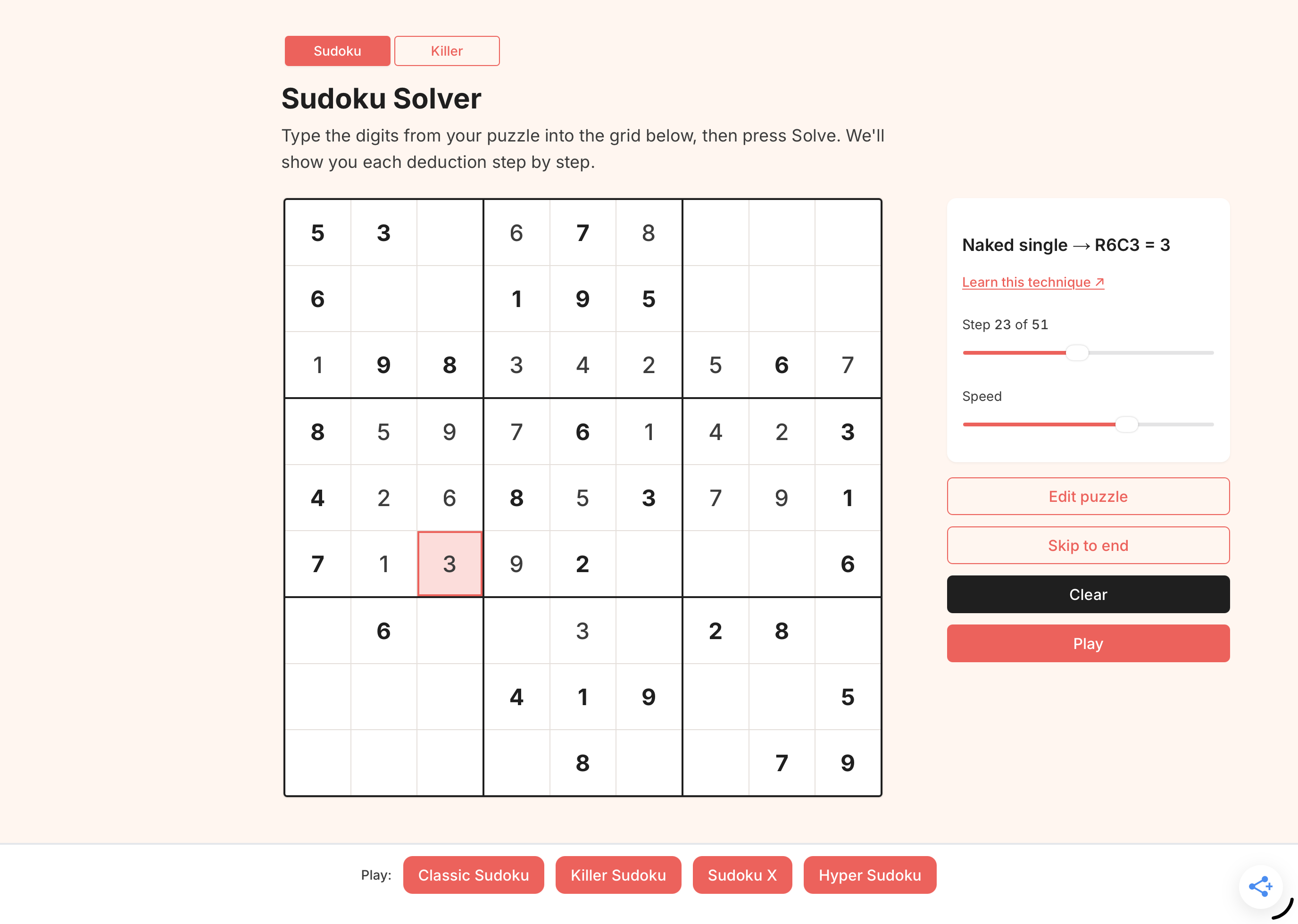
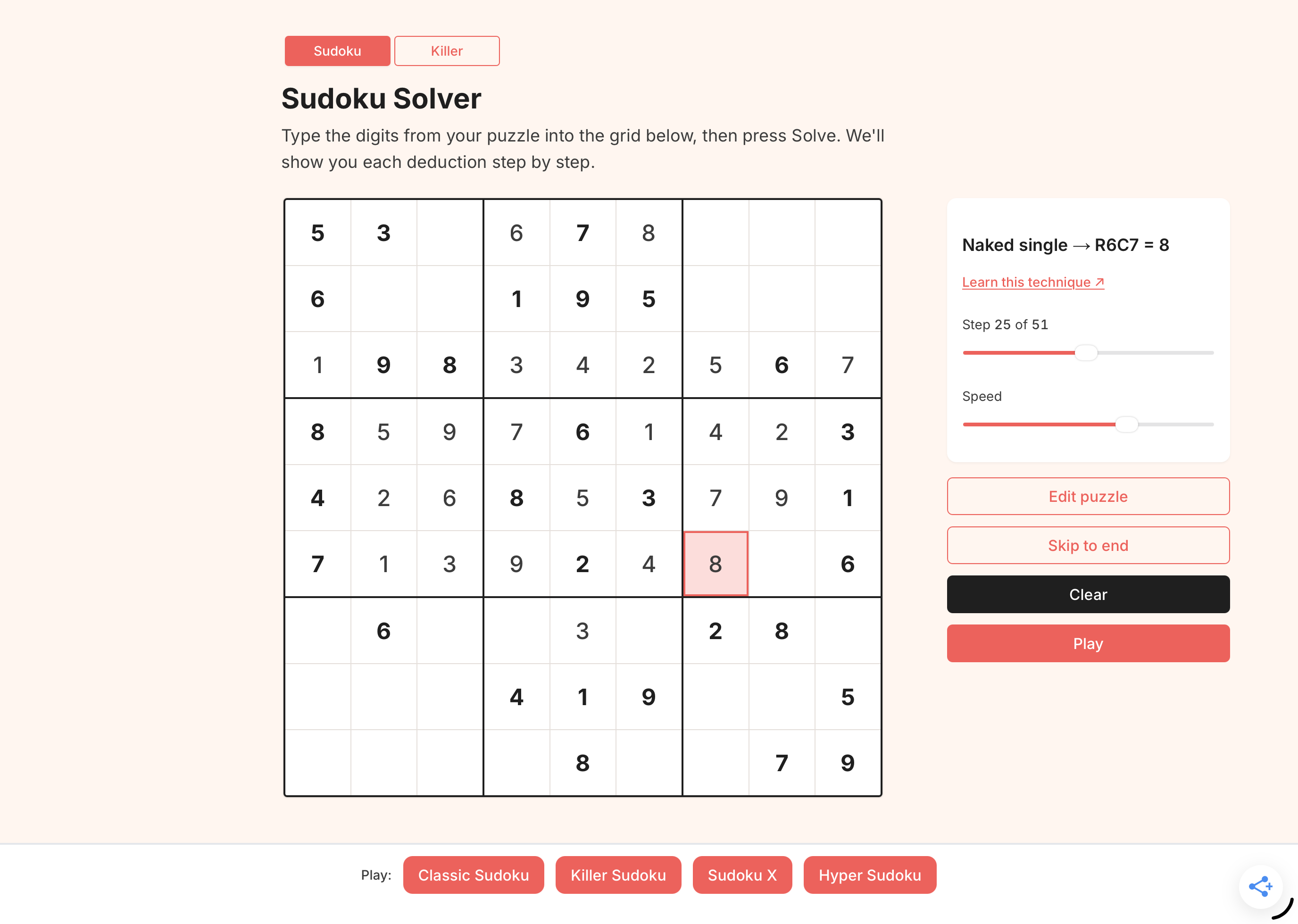
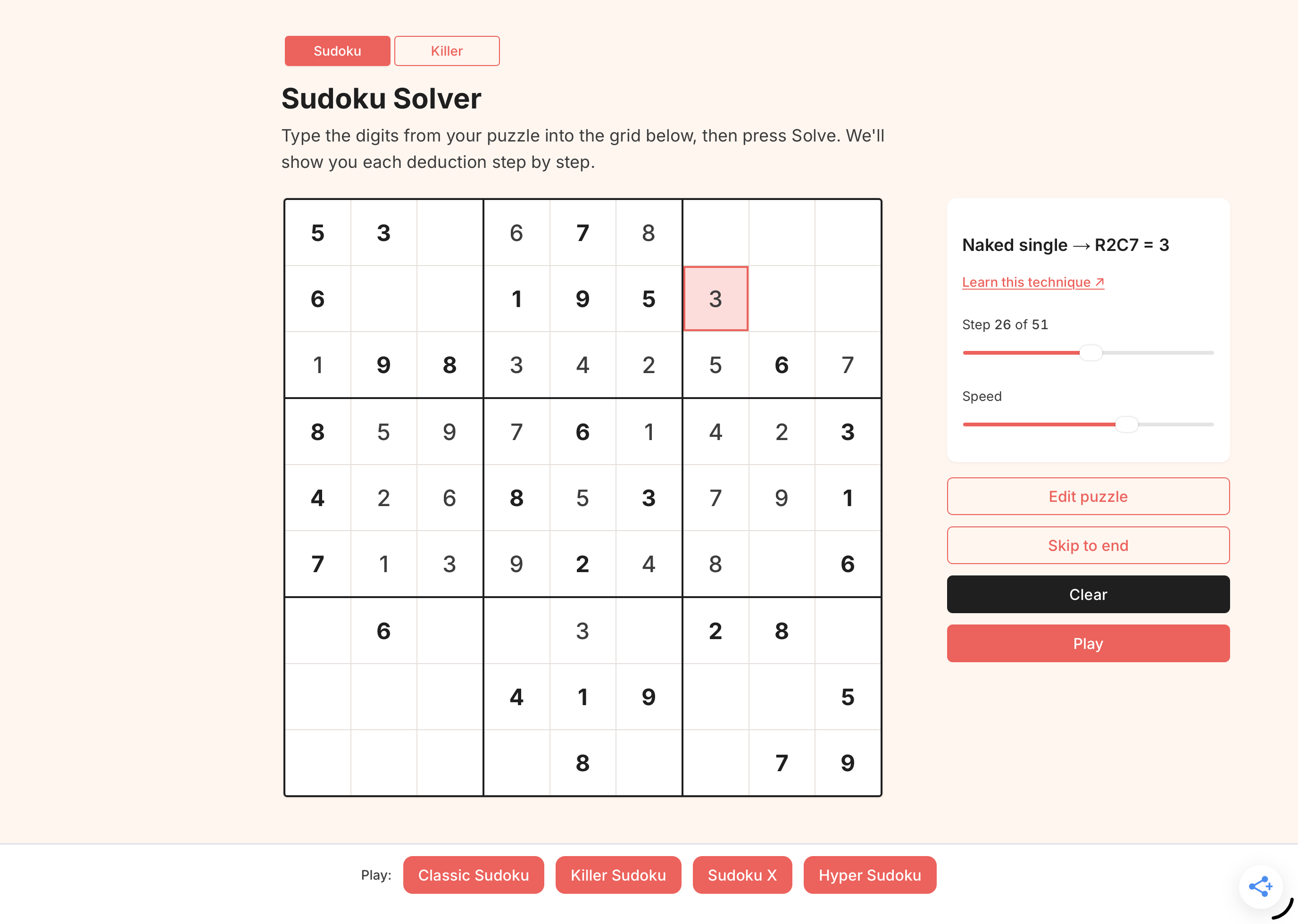
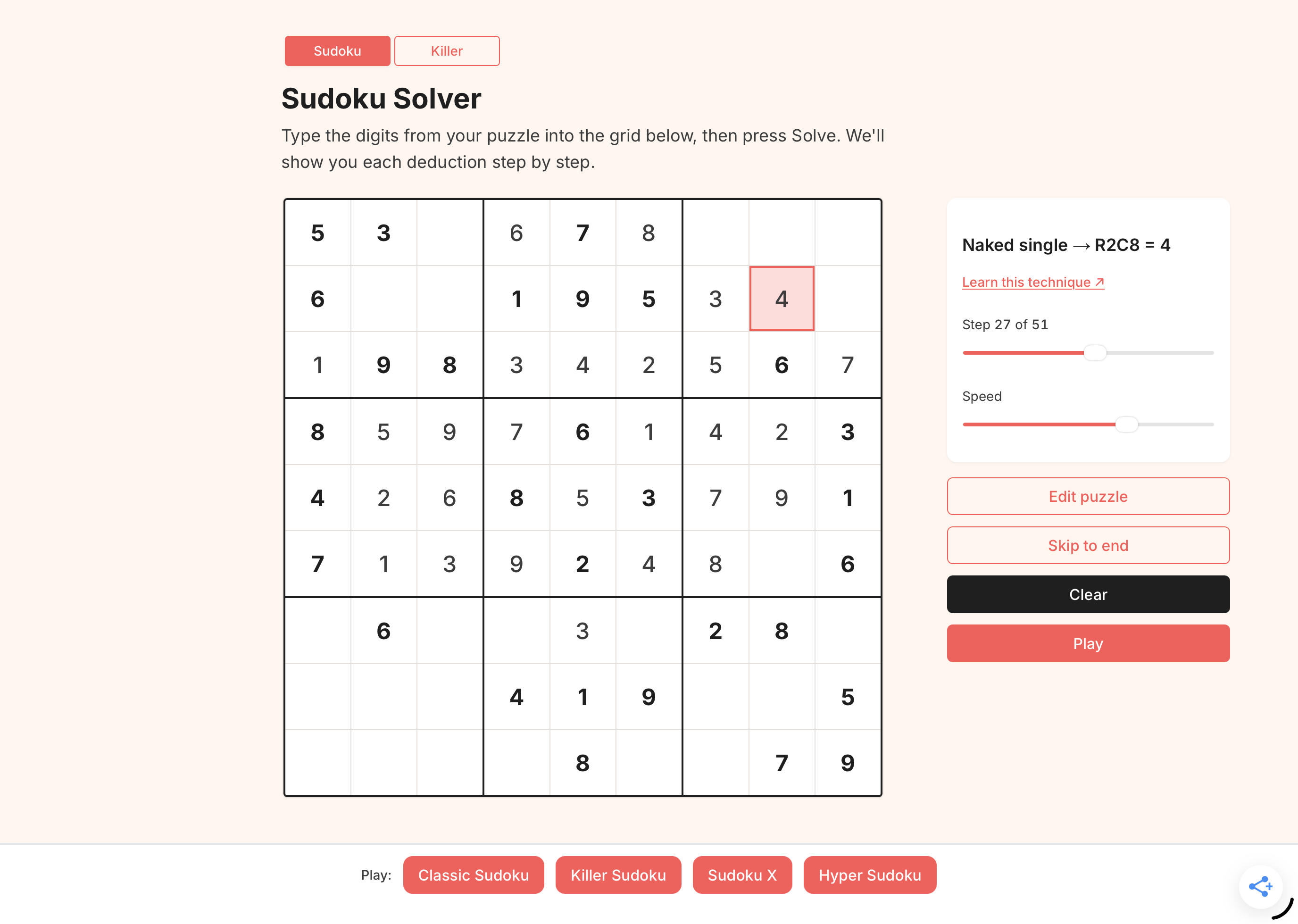
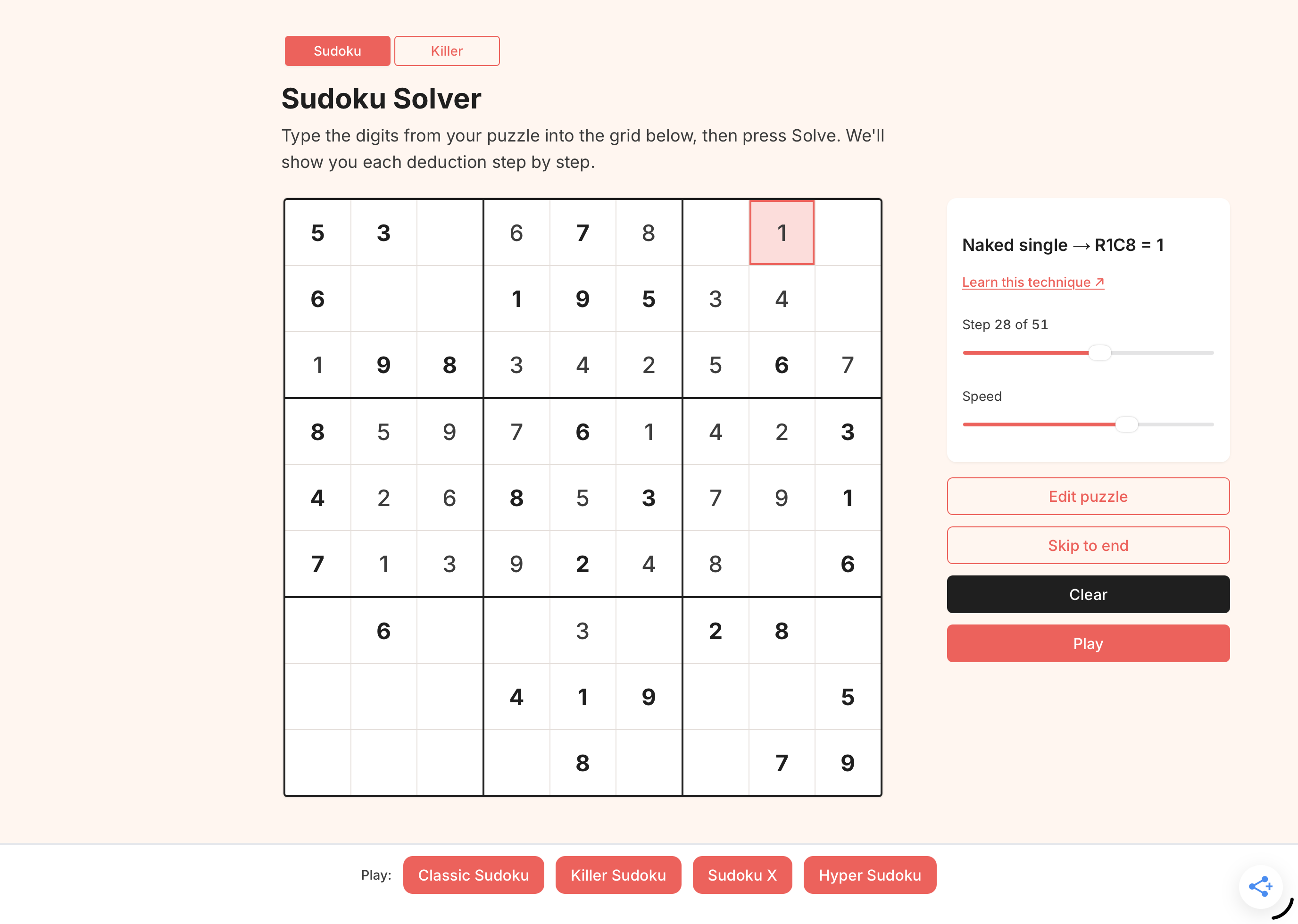
Most solvers do one thing: fill the grid and stop. The Mt. Sudoku solver works through the puzzle one deduction at a time, naming each technique as it goes and linking to the relevant glossary entry — so a player following along is learning while they watch rather than just seeing an answer appear. Classic and Killer are both covered; Killer gets its own dedicated flow, since its cages need to be built before the solve can begin. The interface is deliberately minimal — clear enough that the logic doing the work stays front and centre, not the UI around it.
Teaching widgets
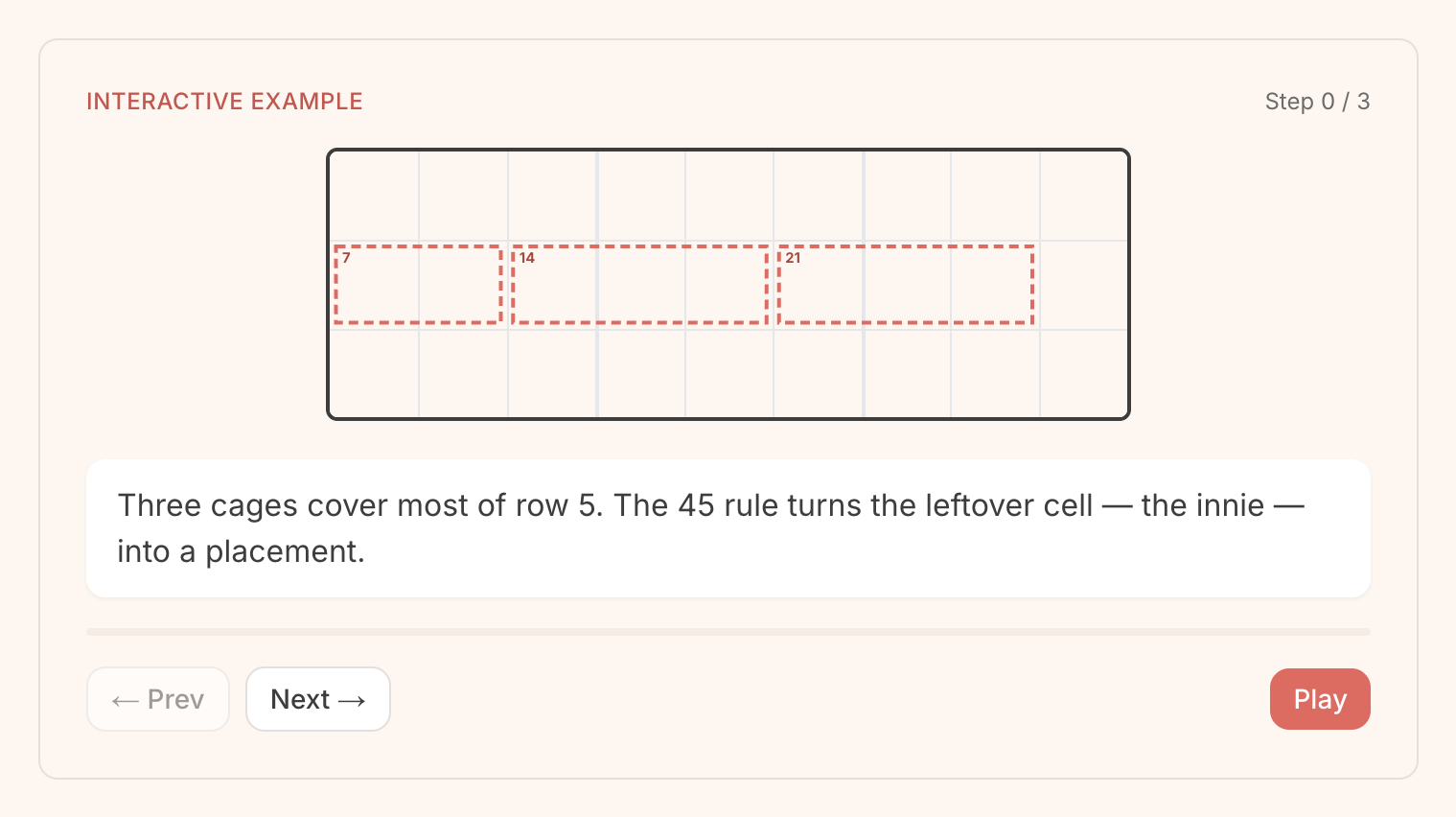
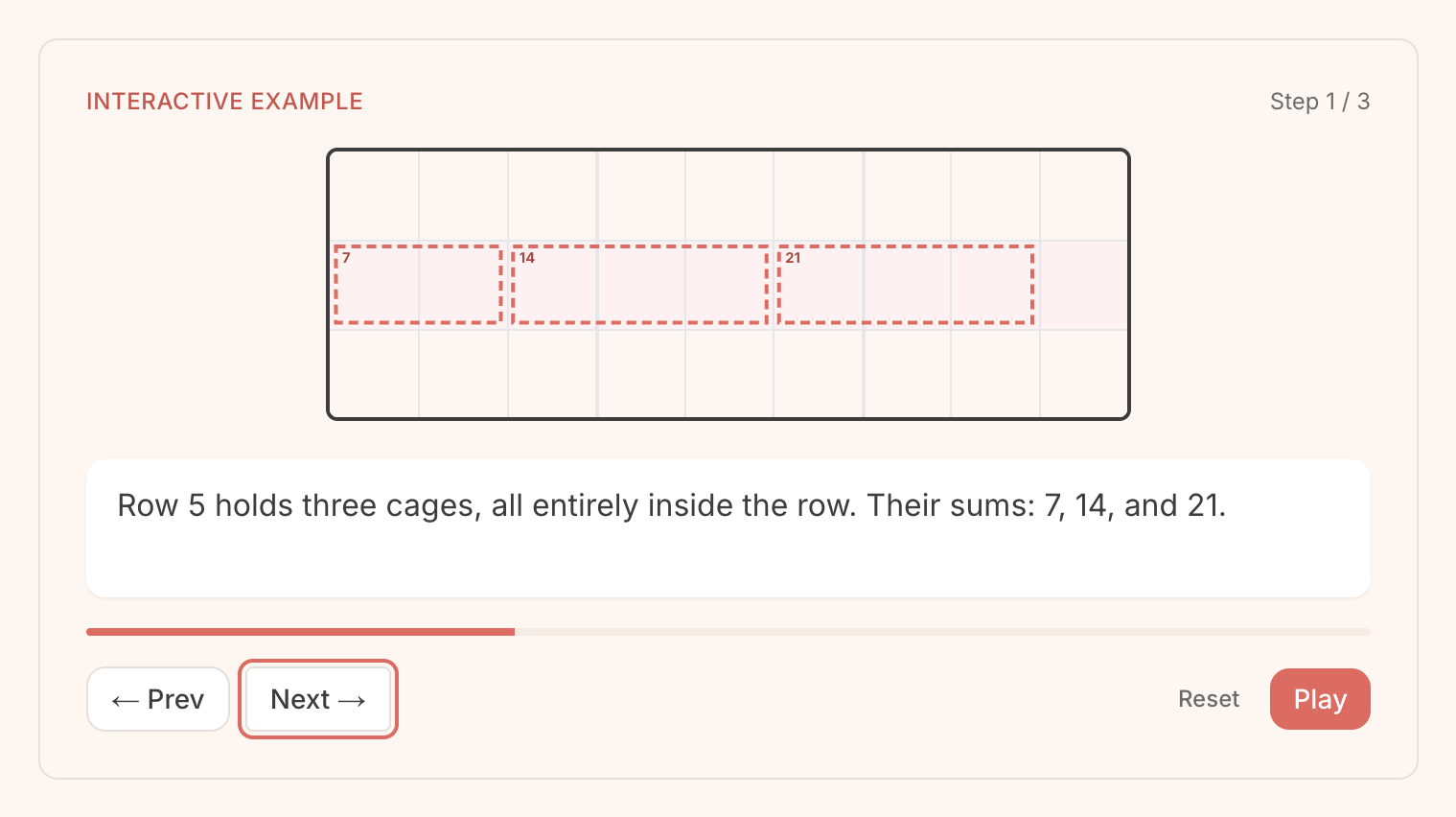
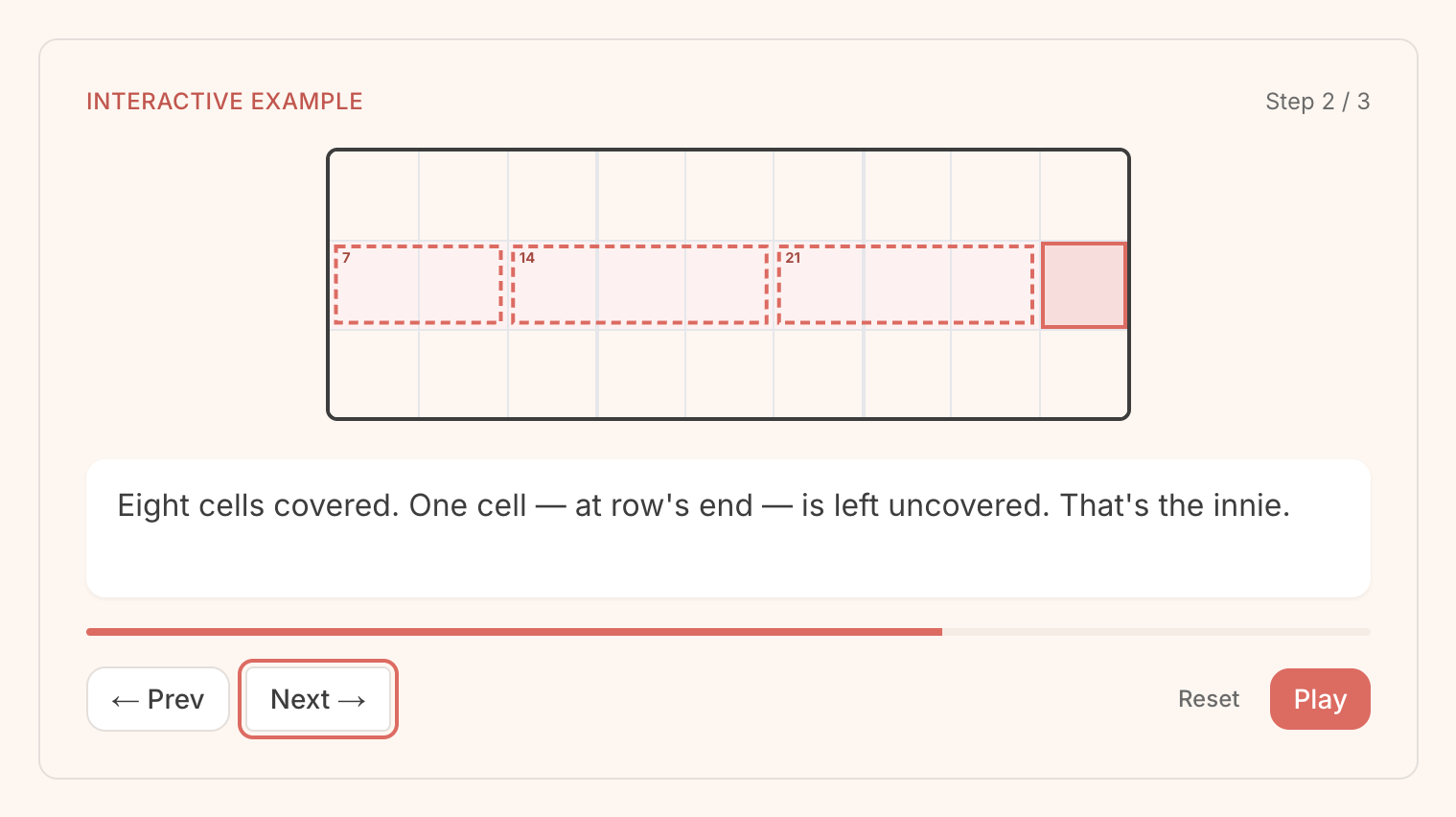
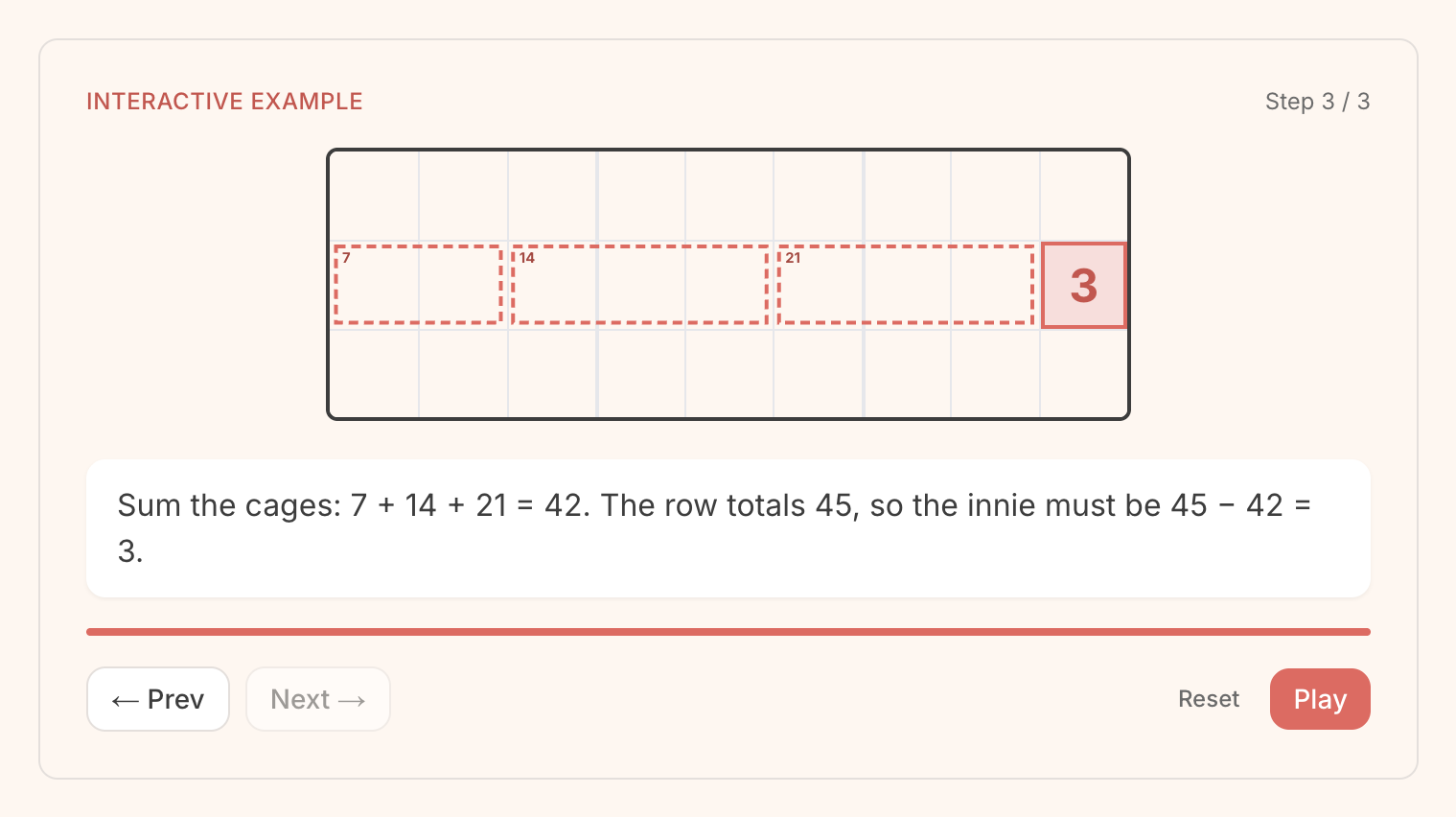
Knowing the rules isn’t the same as learning the techniques. Mt. Sudoku teaches them through more than fifty interactive boards — pencil-mark clusters, X-wings, fish patterns and Killer cages — embedded directly into the 77-entry glossary and the long-form guides. Each widget plays through the technique step by step.
Programmatic pages and printables
Every legal sum-and-cell combination in Killer Sudoku gets its own page — ninety-five of them across cage sizes two to six (2-cell sum 3, 3-cell sum 6, 5-cell sum 15) — each one named, its digits listed and slotted into the breadcrumb under its parent technique, so a player stuck on one exact clue can search the pattern and land on a page that answers it and points to where to go next.
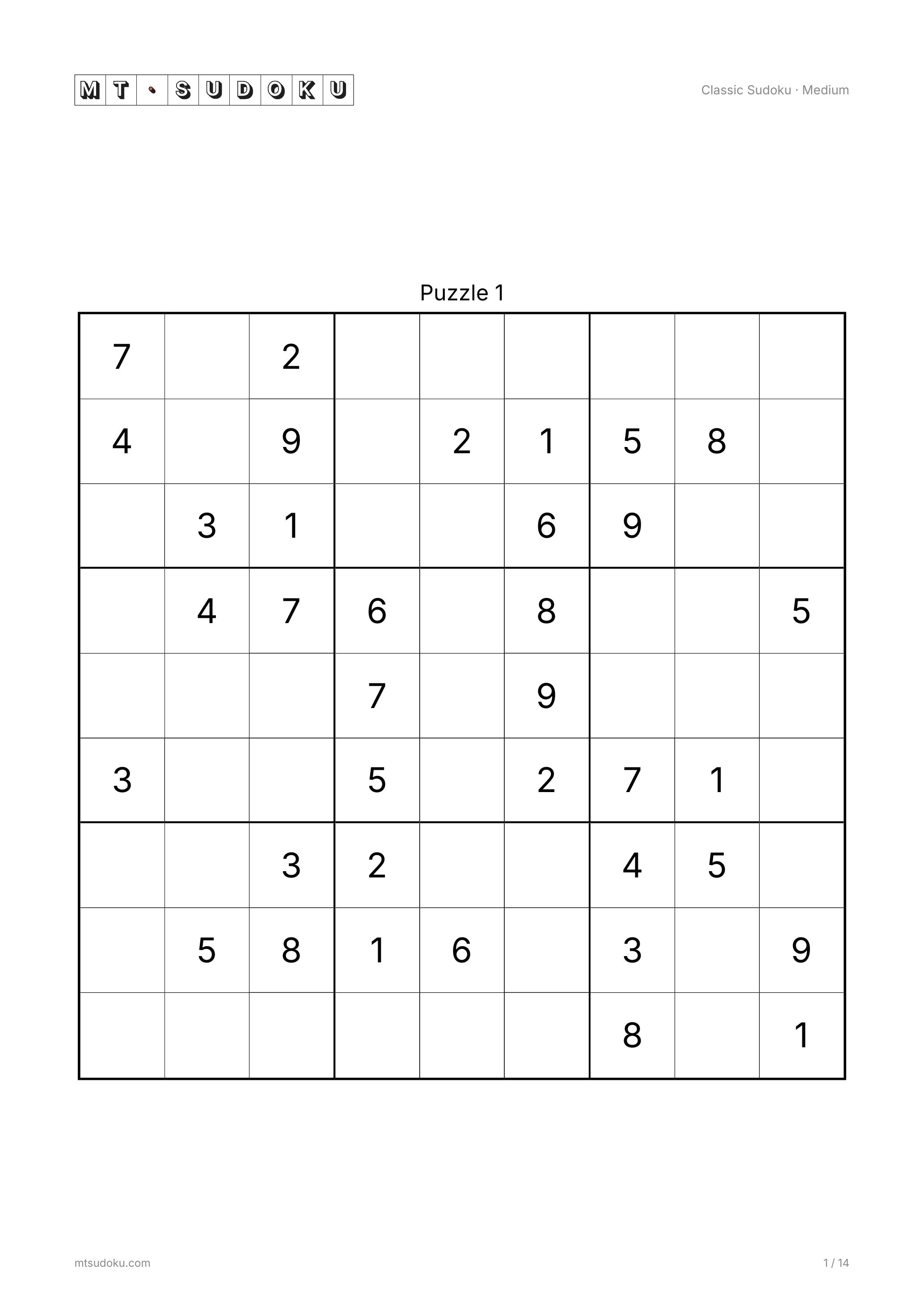
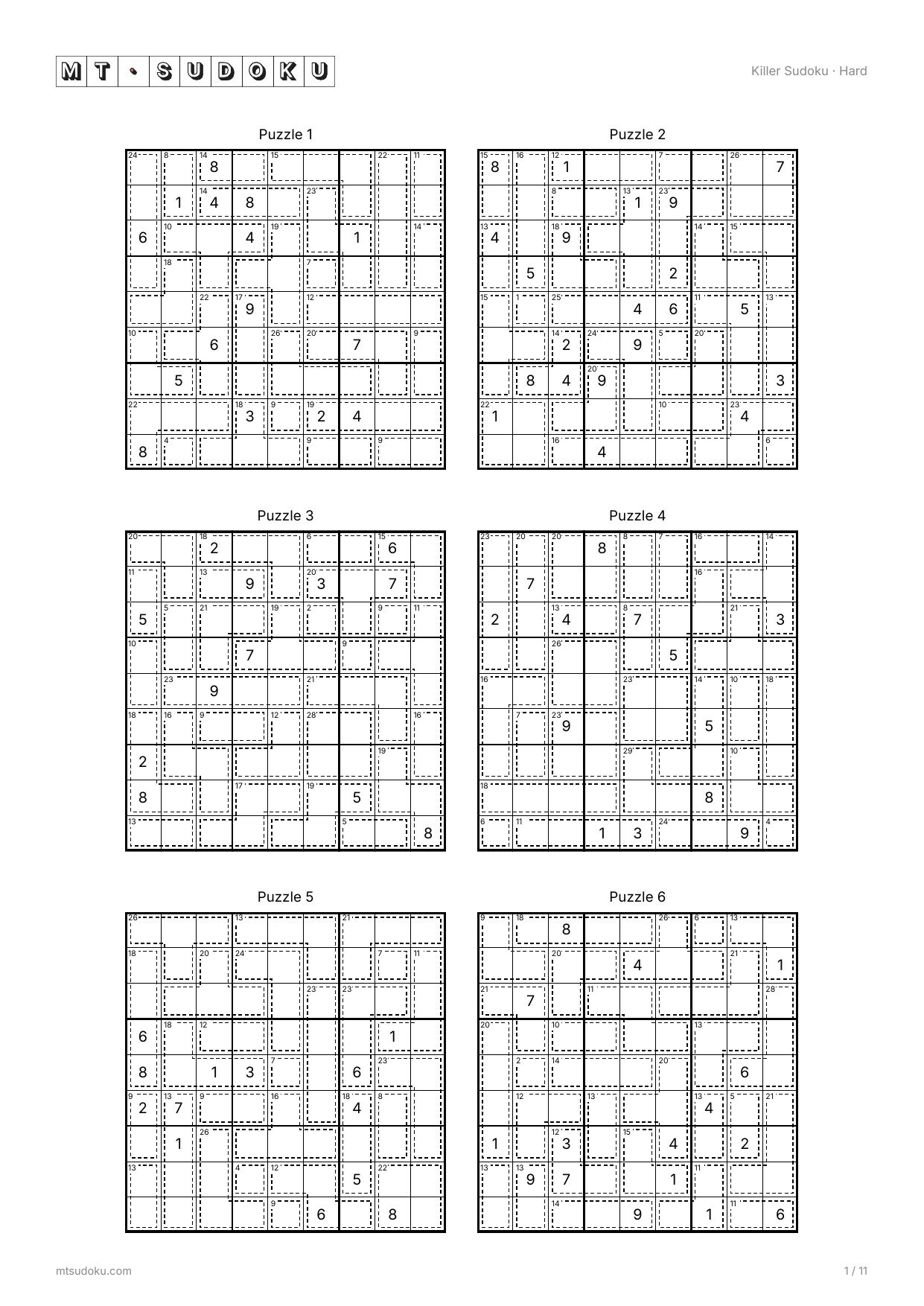
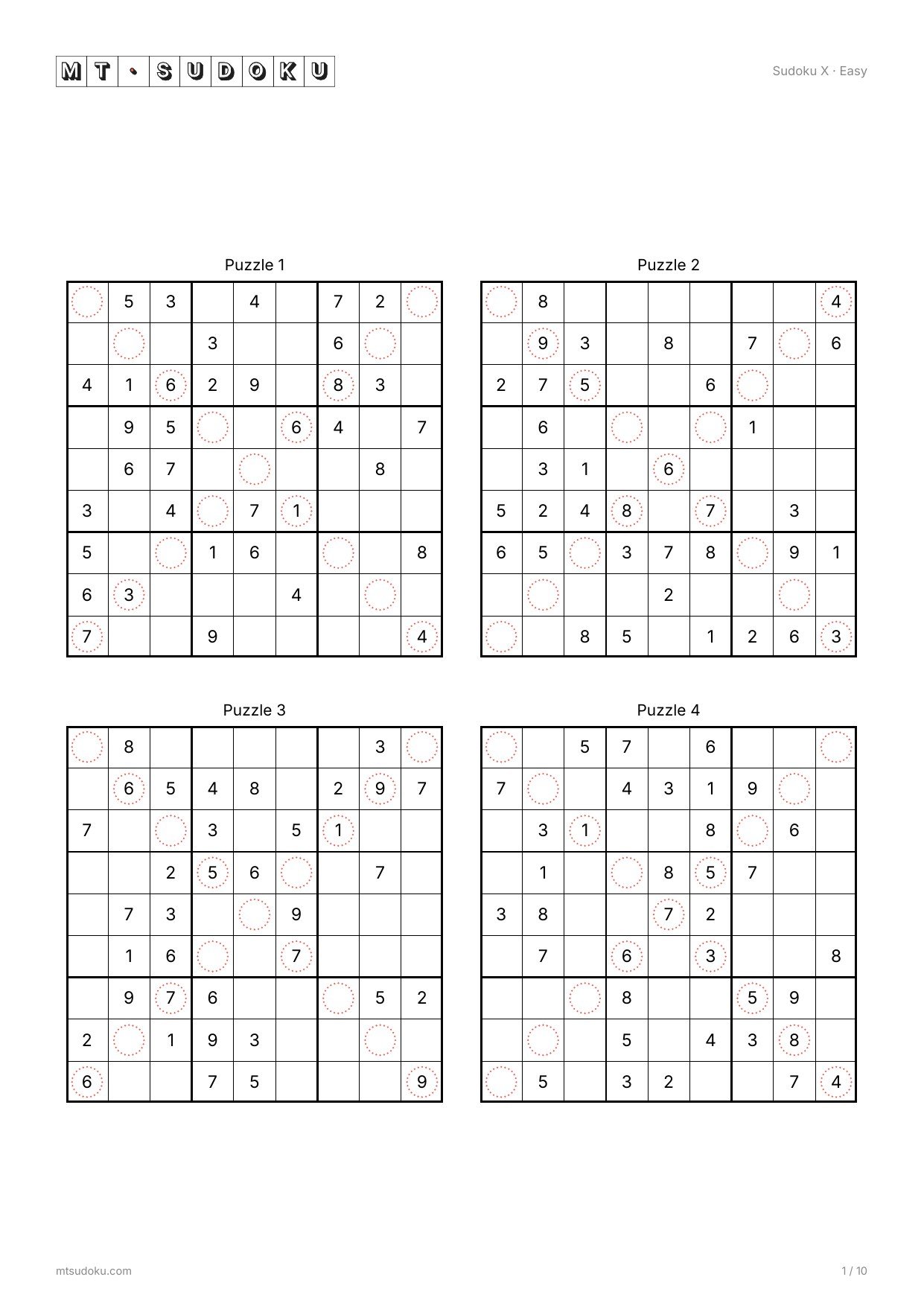
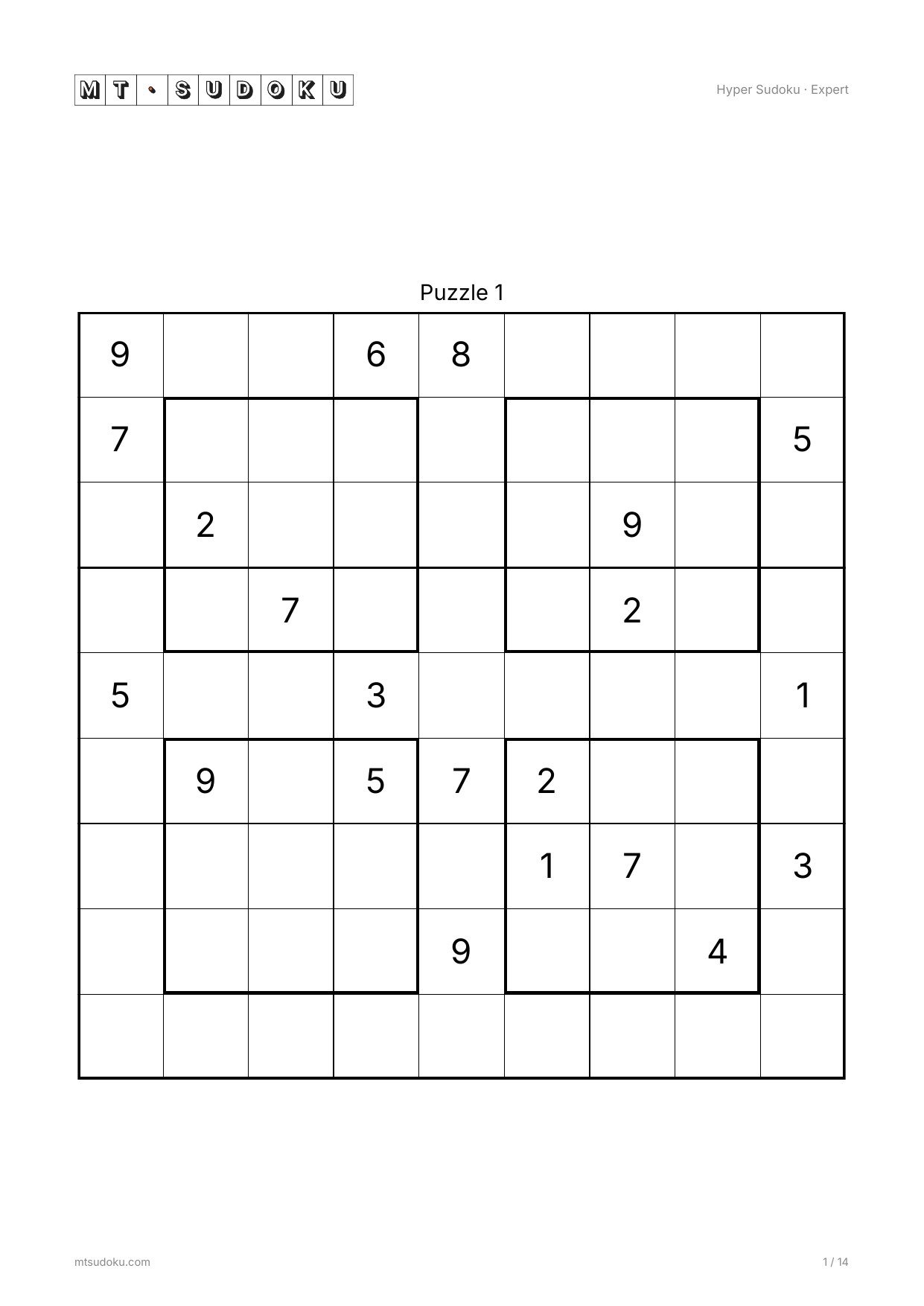
The same generate-once logic feeds the printable library: 1,200 single-click PDF packs across the four variants and various difficulty levels. Both are built to scale — more languages, more packs — without me having to manually create each one.
EU compliance stack · Mt. Sudoku operates in Germany as a properly registered business: a TMG §5 Impressum, an MStV §18 declaration, a Usercentrics consent management platform wired to Google Consent Mode v2, and a bilingual operator-quality privacy policy.

AI as a force multiplier
The visual design and product UI were built in Figma and coded with Claude as a collaborator — I shipped the complete design-to-production pipeline in 30 days. The illustration system is a separate layer: a small set generated in Midjourney, curated, then used to train a LoRA that produces the full set consistently across the article banners. Articles are AI-drafted on a strict editorial register, then copy-edited. AI takes my design work and decision-making to team scale without losing creative autonomy.
Outcome
Live in production at mtsudoku.com. Pending monetisation review.
Next case study
Tourlane →Two years leading the design work at Tourlane — a 100-page brand book in partnership with Jung von Matt, a modular ad system, MyWay print magazine and a CRM redesign.